
PAYAM RESEARCH GROUP

RESEARCH THEME 01

Computational & Multiscale Mechanics

Development and application of numerical and multiscale modelling techniques to investigate the mechanical behaviour of materials and structures.

← All research themes

About this research theme

This research theme focuses on computational approaches for understanding material behaviour and mechanical processes across different length scales. Areas of interest include particle-scale simulation, finite element analysis, nonlinear mechanics, and methods for connecting microstructural behaviour to macroscopic engineering response.

Selected Research Projects

Explore representative research activities, project methods and directly associated research outputs.

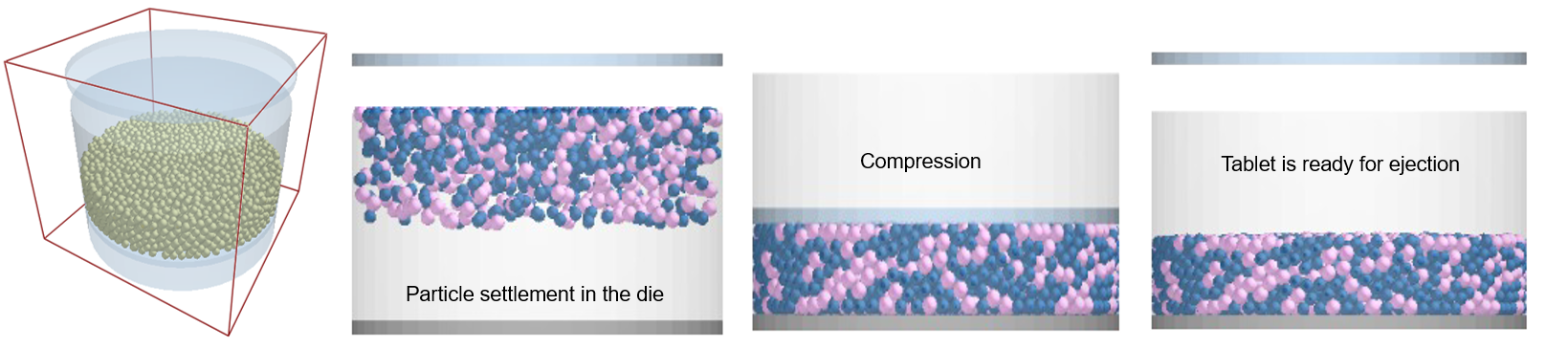
Computational model of pharmaceutical particles subjected to compression

Illustration of pharmaceutical granular materials during particle-based compaction.

PROJECT 01Selected research project

Computational Modelling of Pharmaceutical Powders and Tablet Compaction

Particle-based numerical modelling of pharmaceutical granular materials, with an emphasis on powder behaviour, inter-particle contact and the mechanics of compaction. This project connects microscopic interactions to the mechanical response of compressed granular assemblies.

Project focus and methodology
  • Discrete element modelling and inter-particle contact
  • Particle rearrangement and deformation during compaction
  • Micro-to-macro interpretation of granular response
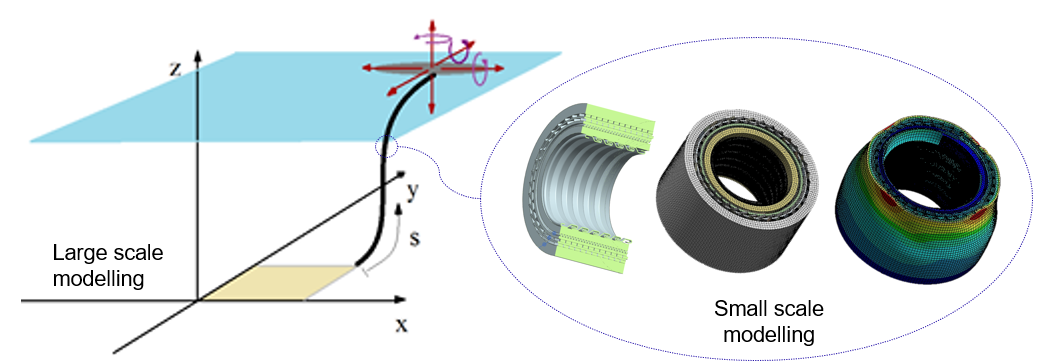
Computational model of a flexible offshore riser

Illustration of flexible-riser geometry and structural modelling.

PROJECT 02Published research

Computational Modelling of Flexible Risers

Development and assessment of a structural finite-element formulation for flexible risers, including the treatment of inextensibility constraints. The work addresses efficient numerical representation of slender riser behaviour under applied loading and boundary conditions.

Project focus and methodology
  • Efficient structural finite-element formulations
  • Nodal enforcement of inextensibility constraints
  • Boundary-condition flexibility and numerical efficiency